Showing posts with label Research trips. Show all posts

December 18, 2014

Tips for Planning Your Trip to the Family History Library

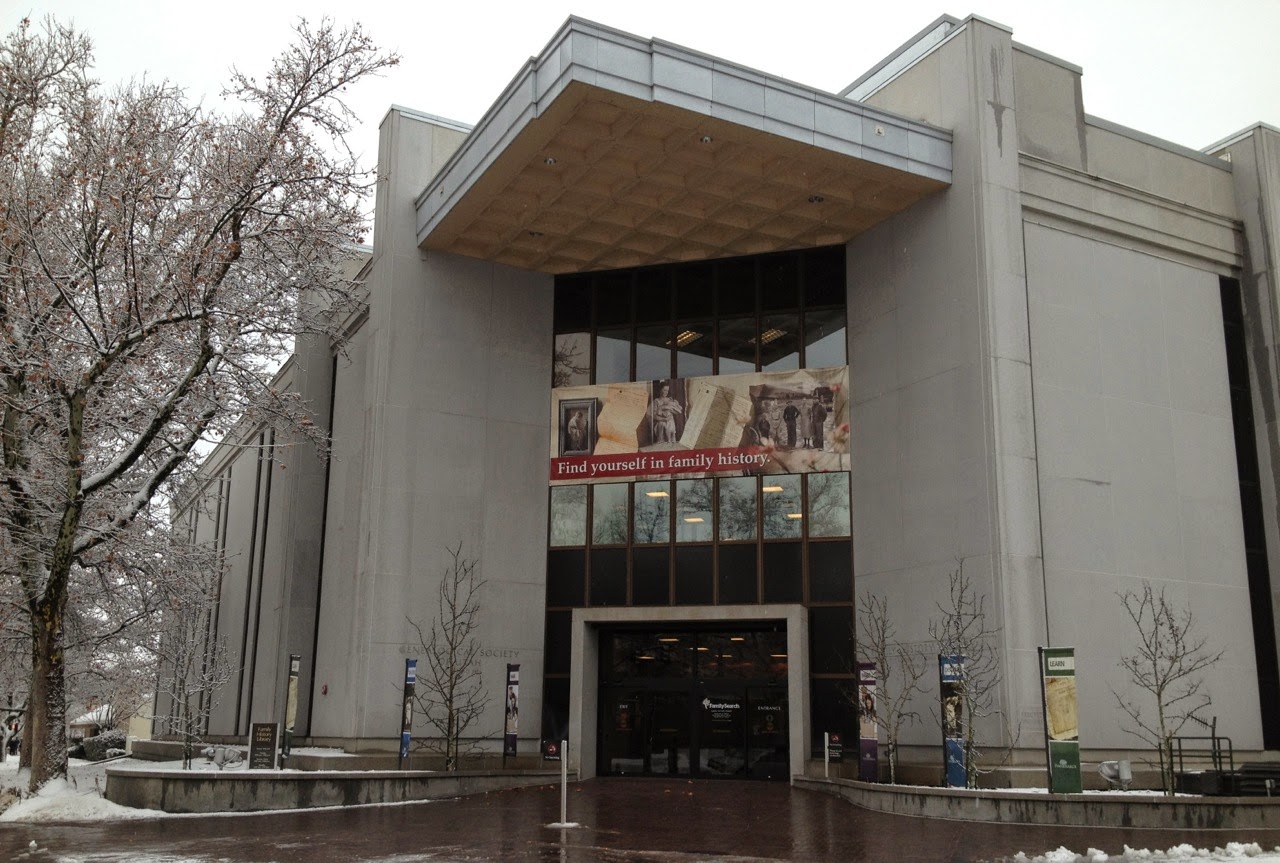
FHL Family History Library

Are you planning your first research trip to the Family History Library (FHL) in Salt Lake City in conjunction with the upcoming Salt Lake Institute of Genealogy,  FGS 2015 Conference and/or RootsTech? Wondering what’s the best way to prepare for it? I was in your shoes a few years ago. I vividly remember what it was like walking into the FHL for the first time, feeling a mix of awe and trepidation at its enormous size. So I’ve pulled together some tips that I hope will help you.

A good place to start is Tips for Visiting the Library on the FamilySearch website. Another handy resource is Janet Hovorka's The Chart Chick's Guide to Salt Lake City, available as a free PDF download. The FamilySearch blog recently posted Exciting New Changes at the Family History Library. The FGS Voice Blog offers A Virtual Tour of the Family History Library with hours and layout of the building, to help you know what to expect.

If you read these, you’ll notice a few common threads. One thing everyone recommends is that you do some prep work at home before walking in the door of the Family History Library.

But how, exactly, do you do that? Start by identifying the books, journals, and microfilm reels you want to look at from the FamilySearch catalog. Here’s an easy method for determining what you want to do:
  • Enter the place where your ancestors lived, from largest body to smallest: country or nation, state or province, county or parish, town or city. (Example: United States, Pennsylvania, Lehigh, Allentown) As you're typing, the locality you want may pop up; go ahead and click on it. Keep in mind that you'll usually get more results by searching on the county only, without naming a town.
  • Choose what you want to look at from the results (cemeteries, church records, vital records, etc.).
  • Click on a title to see a particular resource. When you find one you want to check, either print out a copy to take with you or add it to a Word document, Excel spreadsheet, or electronic note-taking application like Evernote or Microsoft OneNote
  • Write a note about who or what you want to look for right there on your print-out, list, or spreadsheet, along with any pertinent details. (Example: “Look for John Eberhard/Mary Comfort marriage in Lehigh Co. around Dec. 1891.”) If there’s more than one microfilm listed, circle or highlight the one you need to get from the drawer in a bright color.
  • Return to the Catalog home page and search by Surnames, repeating these steps.
  • Organize resources by where you'll find them in the library. Since family history books, locality-based books, US/Canada microfilm, and international microfilm are on different floors of the library, it helps to know what you need to get on each floor.
  • Make a master list of your highest priority items—those sources you want to be sure to look at. It's easy to lose track of time, and you don't want to forget to do something important. I make a list on Evernote, and print it as well so I can check things off as I do them.

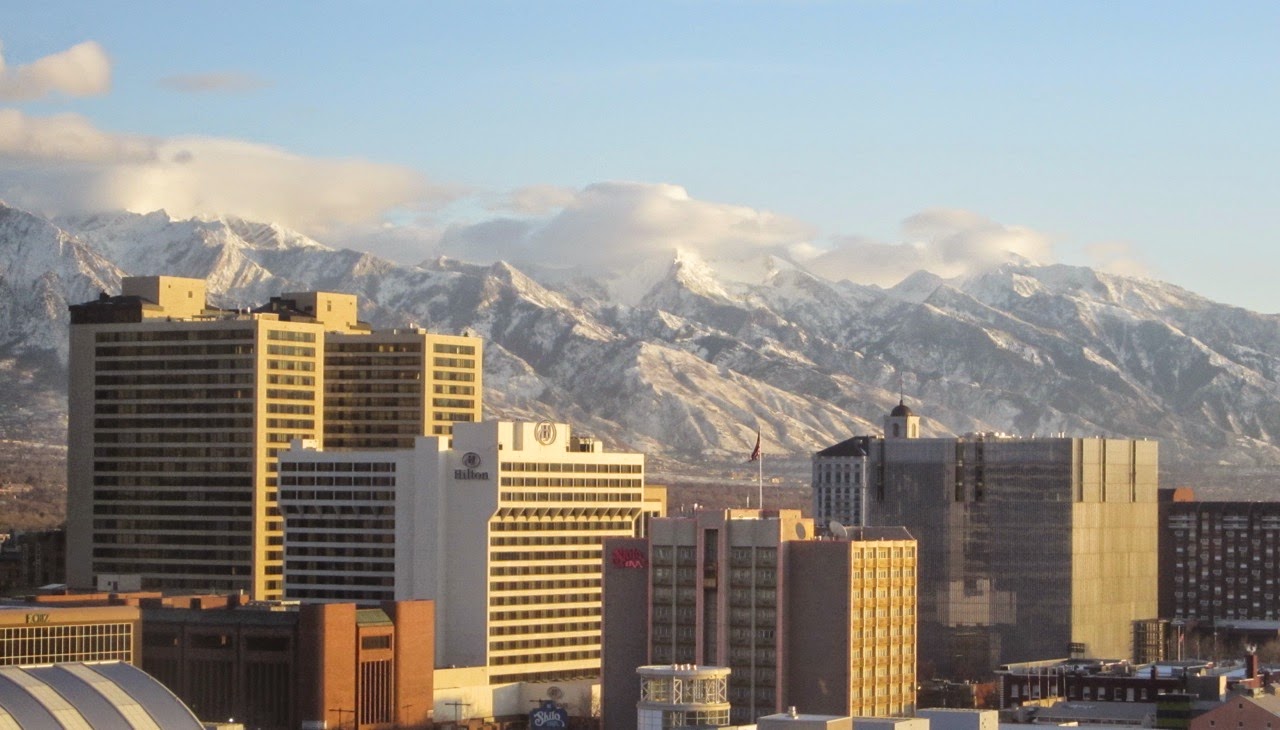
Salt Lake City

Another common question is what should I bring with me? Essentially, you'll want to bring the research tools you're most comfortable with. Here's some of the things I'd suggest:
  • A laptop or tablet to check resources, take notes, and consult your genealogy database. You don't want to get there and waste time duplicating what you already have, or wondering how William Whatever fits into your family tree.
  • Blank research logs to record your results and sources. I make myself write down the title, author, film number, and other citation elements before I open the book or crank the microfilm. Then I record the volume, page number, and details when I find something. If I don't find anything, I write "no record found" or a similar note.
  • One or two USB flash drives. Try to buy the kind that you can attach a small keychain to. That way, if you accidentally leave the flash drive in one of the scanners (speaking from personal experience), you have a better chance of getting it back.
  • A digital camera and spare battery. You can save time and money by taking pictures of books and articles rather than making copies. Some people take pictures of microfilm, too, to avoid lines at the scanners. 
  • Dollar bills for the copier, for those times when you want to print from a book or microfilm. Copies are only a nickel each. 
  • Reading glasses, if you use them, or a small magnifying glass.
  • A pouch with pencils, pens, paper clips, small post-it tabs, and any other items you usually use, and a notepad to write on.
  • Money, bottled water, and/or snack to eat in the snack room. Trust me, you'll get hungry, but it's soooo hard to tear yourself away. 
  • Chapstick. The air is dry in Salt Lake City.
  • Some kind of tote, backpack, or rolling bag to put everything in. Lockers are available, but I usually carry my things around with me.

That's about it. There's a short orientation film you can watch when you first arrive. As you're working, the volunteers and staff at the FHL will be more than happy to answer all the questions you ask, like where to find things, how to work the printers and scanners, and where the snack room is. You’ll be in good hands.

My first visit to the FHL was both exhilarating and exhausting. I made some great discoveries—one of which I wrote about in “Striking Gold in Salt Lake City”—and found a lot of information about my ancestors. Here’s hoping that your first visit will be everything you've dreamed of!

--Shelley

Note: This post is a reprise of the one I wrote for the FGS Voice Blog, Tips for Researching at the Family History Library, published December 8, 2014. 

March 26, 2012

Basking in the Midwest Genea-Glow

I had the most wonderful time this past weekend researching at the Allen County Public Library in Ft. Wayne, Indiana. Even though I didn’t break down any of my brick walls, I found some interesting things that I can’t wait to analyze further. What made it even better was the company there. About twenty genealogy bloggers from the Midwest (and Canada) gathered for a weekend of research, camaraderie, and laughter.

When Tina Lyons (Gen Wish List) and Terri O’Connell (Finding Our Ancestors) announced they were organizing a get-together for Midwestern genealogy bloggers, I jumped at the chance to attend. The Genealogy Center at ACPL is renown for its collection of U.S. and international resources. Since I’m starting to dip my toes into Irish research, I was particularly eager to take a look at those materials. I watched the orientation video that that the library has online, and began making my research agenda. Family histories. State and county record abstracts and mug books. PERSI. Irish cemetery transcriptions. Microfilm. Online databases. Like a kid in a candy shop, my list grew and grew.


Before I knew it, the weekend arrived. Stephanie Fishman (Corn and Cotton Genealogy), Jennifer Alford (Jen-Gen’s Family History), and I talked non-stop in the car the whole way to Ft. Wayne. I walked into the library with that sense of unbridled anticipation I always have for research trips. Anything is possible!


The first person we saw was Tina. She showed us where Diana Ritchie (Random Relatives) and Laura Cosgrove Lorenzana (The Last Leaf on This Branch) were sitting and gave us an impromptu tour around. Studious little genealogists that we are, we grabbed some books and quickly got down to work.


Then Thomas MacEntee (Geneabloggers, Destination: Austin Family) and Terri O’Connell walked in, soaked from the rain, and the party started. Susan Clark (Nolichucky Roots) joined us from the microfilm room, where she had been secretly hiding out getting things accomplished. We crammed as much research in as we could until the closing announcement. 

L to r: Stephanie Fishman, Jennifer Alford, Tina Lyons, Laura Lorenzana
Thomas MacEntee
We trekked to a nearby Irish pub for dinner and refreshments. I think that fit nicely with my Irish research goals, don't you? Jennifer Holik (Generations), Kathryn Lake Hogan (Looking4Ancestors), and a few others joined us there.
L to r: Terri O'Connell, Laura, Jen Holik, Stephanie
Susan Clark and yours truly 
Jennifer A., Susan, and Tina
The next day at the library our numbers increased. Margel Soderberg (2338 W. Washington Blvd.), Brenda Leyndyke (Journey to the Past), Lisa VonLanken (The Shy Genealogist), Linda Swisher (Round Tuit Genealogy), Harold Henderson (Midwestern Microhistory), Lisa Ellam (The Faces of My Family), Patricia Biallas (Genea Journeys), and Diane Biddell (Adventures in Brown County History & Genealogy) were among those who joined us. A librarian treated us to an official tour of the Genealogy Center.


Back at the tables, it was so quiet you could hear the pages turning and the wheels in our heads spinning. I’ll share some of my discoveries once I’ve had a chance to analyze and process the information. Derek Davey (Genealogy—Northwest Ohio) stopped by to visit.

Tina and Lisa VonLanken


Jen Holik wowed us by showing us copies of Branching Out, her newly released genealogy books for kids. Her six workbooks—two each for grades 1-3, grades 4-8, and high school—look amazing. They’re sure to become a hit with teachers, scout groups, libraries, societies, homeschooling parents, and anyone who wants to help kids discover their family history. She's selling the books now on her website.

After closing down the library that evening, we drove to Tina’s house. She had graciously invited us all over for a pizza party. The beads, food, and conversation flowed into the night. Diana shared her father’s famous cookies. It’s hard to wear out a group of genealogists, but I admit to being one tired cookie myself as we drove back to the hotel.

Laura, Tina, Margel Soderberg, Linda Swisher, and Diana Ritchie
The next morning after breakfast we reluctantly said good-bye and headed back to the cities we had come from. I had such a good time. Thanks to Terri and Tina for organizing the get-together. It seems incredible to think I'd never met a single one of these people until the FGS Conference in Springfield last September, and many I just met for the first time this weekend. There’s already talk of doing another Midwest Geneabloggers event this fall, so if you weren’t able to come this time, keep a look out. I’ll share the news once a date is set, so you can join us. One thing’s for sure—Midwest Geneabloggers know how to have fun!

Related Posts:

January 24, 2012

Tips for First-Time Family History Library Visitors

Family History Library

Are you planning your first research trip to the Family History Library (FHL) in Salt Lake City in conjunction with the upcoming 2015 FGS Conference and RootsTech, or the Salt Lake Institute of Genealogy? Wondering what’s the best way to prepare for it? I was in your shoes a few years ago. I vividly remember what it was like walking into the FHL for the first time, feeling a mix of awe and trepidation and thinking, “Holy schmoly! What have I gotten myself into?” So I’ve pulled together some tips that I hope will help you.

A good place to start is Tips for Visiting the Library on the FamilySearch website. Another handy resource is Janet Hovorka's Quick Insider’s Guide to Salt Lake City, available as a free PDF download. The FamilySearch blog recently posted "Exciting New Changes at the Family History Library."

In addition, Kimberly Powell wrote a helpful article titled “Research at the Family History Library” for About.com. DearMyrtle offered her thoughts in “Visiting the FHLibrary in Salt Lake City.” Jill Ball recorded her impressions of her first visit on her blog, Geniaus. Likewise, Randy Seaver recalled his first visit on Genea-Musings.

If you read these, you’ll notice a few common threads. One thing they all recommend is that you do some prep work at home before walking in the door of the Family History Library.
 
But how, exactly, do you do that? Start by identifying the books, journals, and microfilm reels you want to look at from the FamilySearch catalog. Here’s an easy method for determining what you want to do:
  • Enter the place where your ancestors lived, from largest body to smallest: country or nation, state or province, county or parish, town or city. (Example: United States, Pennsylvania, Lehigh, Allentown) As you're typing, the locality you want may pop up; go ahead and click on it. Keep in mind that you'll usually get more results by searching on the county only, without naming a town.
  • Choose what you want to look at from the results (cemeteries, church records, vital records, etc.).
  • Click on a title to see a particular resource. When you find one you want to check, either print out a copy to take with you or add it to a Word document, Excel spreadsheet, or electronic note-taking application like Evernote or Microsoft OneNote
  • Write a note about who or what you want to look for right there on your print-out, list, or spreadsheet, along with any pertinent details. (Example: “Look for John Eberhard/Mary Comfort marriage in Lehigh Co. around Dec. 1891.”) If there’s more than one microfilm listed, circle or highlight the one you need to get from the drawer in a bright color.
  • Return to the Catalog home page and search by Surnames, repeating these steps.
  • Organize resources by where you'll find them in the library. Since family history books, locality-based books, US/Canada microfilm, and international microfilm are on different floors of the library, it helps to know what you need to get on each floor.
  • Make a master list of your highest priority items—those sources you want to be sure to look at. It's easy to lose track of time, and you don't want to forget to do something important. I make a list on Evernote, and print it as well so I can check things off as I do them.

Salt Lake City

Another common question is what should I bring with me? Essentially, you'll want to bring the research tools you're most comfortable with. Here's some of the things I'd suggest:
  • A laptop or tablet to check resources, take notes, and consult your genealogy database. You don't want to get there and waste time duplicating what you already have, or wondering how William Whatever fits into your family tree.
  • Blank research logs to record your results and sources (here's one I like from Duane Bailey). I make myself write down the title, author, film number, and other citation elements before I open the book or crank the microfilm. Then I record the volume, page number, and details when I find something. If I don't find anything, I write "no record found" or a similar note.
  • One or two USB flash drives. Try to buy the kind that you can attach a small keychain to. That way, if you accidentally leave the flash drive in one of the scanners (speaking from personal experience), you have a better chance of getting it back.
  • A digital camera and spare battery. You can save time and money by taking pictures of books and articles rather than making copies. Some people take pictures of microfilm, too, to avoid lines at the scanners. 
  • Dollar bills for the copier, for those times when you want to print from a book or microfilm. Copies are only a nickel each. 
  • Reading glasses, if you use them, or a small magnifying glass.
  • A pouch with pencils, pens, paper clips, small post-it tabs, and any other items you usually use, and a notepad to write on.
  • Money, bottled water, and/or snack to eat in the snack room. Trust me, you'll get hungry, but it's soooo hard to tear yourself away. 
  • Chapstick. The air is dry in Salt Lake City.
  • Some kind of tote, backpack, or rolling bag to put everything in. Lockers are available, but I usually carry my things around with me.

That's about it. There's a short orientation film you can watch when you first arrive. As you're working, the volunteers and staff at the FHL will be more than happy to answer all the questions you ask, like where to find things, how to work the printers and scanners, and where the snack room is. You’ll be in good hands.

My first visit to the FHL was both exhilarating and exhausting. I made some great discoveries—one of which I wrote about in “Striking Gold in Salt Lake City”—and found a lot of information about my ancestors. Here’s hoping that your first visit will be everything you've dreamed of!

--Shelley

LinkWithin

Related Posts Plugin for WordPress, Blogger...