Showing posts with label Ballenger. Show all posts

January 17, 2017

Thoughts on January, Goals, and Preparing for SLIG

I love hanging a new calendar on the wall. There’s something about seeing all those days, all those fresh possibilities, ahead. Give me a new planner and a few colored pens and I’m happy as can be. No matter that I know it will soon be as fully packed as the last one—it’s still bright and clean, and hope abounds.

In the past I’ve written out goals for the year, but this January I decided not to. Things change so much in the course of a year that I typically find myself disappointed in December that I didn’t accomplish what I said I intended to, in spite of how much I actually did accomplish.

Instead, I’m setting a few specific quarterly objectives that take into account deadlines for articles, presentations, and projects I already have on my schedule. That way I may have some reasonable chance of achieving them and feeling good about it. I’m only doing the winter objectives to begin with. It’s a short, manageable list, designed to keep me focused.

The advantage of this quarterly approach is that I’ll have the chance to set new objectives three more times this year. Gives me a clean slate at the start of each season. I like that.

One objective on my winter list is to learn more about my ancestors from Virginia. I have two clusters of Virginia ancestors: the Roush family in Shenandoah County, and the Ballenger, Adams, and Nalley families in Prince William, Fauquier, and Fairfax counties. My primary focus is the Revolutionary War period and the decades following it, as my direct ancestors were all in Ohio before 1840.

To do this, I need to learn how to find, interpret, and use some of the lesser-known historic records that may hold evidence of them. That ties in with my upcoming trip to the Salt Lake Institute of Genealogy (SLIG) from January 22-29. I’m taking a course called Virginia from the Colonial Period to the Civil War, taught by Barbara Vines Little and Victor Dunn. I’m excited about this opportunity and hope it opens some new doors for me.


Naturally, I want to work in as much research time at the Family History Library as possible. But because my time outside the classroom is limited, I need to do some prep work ahead of time. That’s what I’m working on now. I’m identifying questions I have and the record groups that might provide answers, and looking up microfilm numbers and print resources in the FamilySearch Catalog. That should help me hit the ground running in Salt Lake City.

Identifying and finding resources in the FamilySearch Catalog is not that difficult, but it’s not altogether intuitive, either. Want to know how I do it? I outlined my step-by-step process in an earlier post, Tips for Planning Your Trip to the Family History Library. This is my go-to strategy in preparing for a successful research trip.

Researchers study roll upon roll of microfilm at the FHL

As a bonus, the post also includes a packing list of items you just might find invaluable when you get to the FHL. Referring back to it is saving me time this week as I’m getting my suitcase and research bag ready. I guess one of the perks of having a blog is that it occasionally reminds you to take your own advice!

SLIG is always a great opportunity to connect with other genealogists and make new discoveries. It’s an energizing way to begin a new year. If you’re going to be there, please look me up—I’d love to see you. If not, I wish you success with whatever it is you hope to accomplish this winter. Happy New Year!

-Shelley

November 26, 2014

The Moose Behind the Wall


What’s your earliest or most vivid Thanksgiving memory? Have you written it down, or at least told it to someone? These days, with my father suffering from Alzheimer’s disease, I’m realizing just how precious our memories are. It’s a blessing to be able to look back at our lives.

With that in mind, I’d like to share my earliest holiday memory with you. I think I'd just turned five years old. That year, we went to my great-uncle Dwight’s house for Thanksgiving dinner. There’s a black-and-white photograph I saw years ago, with me perched in a step-stool pulled up to the table, but I don’t know where it is now. In my mind, at least, that photo and this memory go together.

Permit me to set the stage a bit. Dwight Ballenger, my grandfather Lloyd’s younger brother, lived in Westerville, Ohio. He and his wife, Betty, had three children, all teenagers at the time, who I didn't really know yet. I saw my grandparents, Lloyd and Nora Ballenger, almost every day. I adored my two aunts, who were in their young 20s. Rounding out the table were my dad and mom, with me and my little brother Eddie, perhaps two years old.

I didn’t seem to fit in anywhere.

The big kids, naturally, didn’t want me bothering them. The women—including my aunts, who were acting very grown up—didn’t want me underfoot in the kitchen while they cooked. The men were, well, men. Their talk was boring. Eddie and I played together, but we must have gotten too rambunctious after awhile.

Next thing I knew, I was banished to the basement. Where the big kids were.

It was bad enough just walking down the steps. They were the scary kind with no back, just planks. That’s all I remember, until I saw the moose.

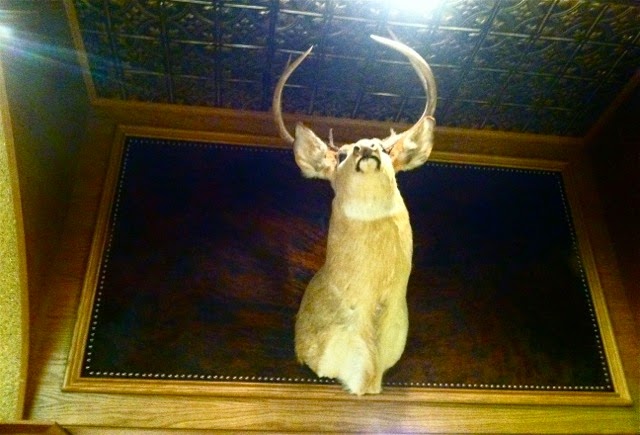
The moose was sticking its head through the wall. How fascinating. It kind of reminded me of Mr. Ed, the talking horse on TV. You didn’t see the rest of Mr. Ed, but he was real all right. So where was the rest of the moose?

My cousins helpfully explained that it was standing behind the wall. If I would just walk around the corner, into the dark side of the basement, I could see the rest of it. I might even be able to touch it.

I was hesitant, but my desire to see the moose trumped my fear of the dark room. Around the corner I went.

Of course there was nothing there. So I did what any disappointed five-year-old would do: ran crying to mom.

When my mom went down to investigate what I was carrying on about, she saw only a deer head mounted on the wall. Time for a certain young lady to calm down, go back upstairs and behave herself for Thanksgiving dinner. I think I stuck to my mom like a shadow the rest of the day.

All these years later, remembering that makes me smile. But the memory may not always be as clear.

So this Thanksgiving, I hope my family (including my mom) will indulge me in a little exercise. I’d like to ask each of them to write down their earliest Thanksgiving memory. It’s simple, and actually a lot of fun to do.  

Do you have a favorite holiday memory? Take a few minutes to write it down, record it on audio or video, add a note to a photograph, or do something to preserve it. Share it with someone if you can. You'll get to relive the moment, and younger family members might just thank you for it one day.

I’m grateful for many things this Thanksgiving—my family and friends most of all. Time has made me increasingly grateful for the gift of memory, too.

Wishing a Happy Thanksgiving to you and yours,
--Shelley


Related Posts:

January 21, 2014

52 Ancestors #3: Marilyn Ballenger, the Aunt I Never Knew


In my last two posts, I wrote about how my grandfather, Lloyd Ballenger, began his 50-year tenure at Reeb’s Restaurant in Columbus, Ohio, in 1933. I also shared how my grandmother, Nora Belle Eberhard, met and fell in love with him, leading to their elopement on March 30, 1935. I’ll continue their story this week, although it’s a much harder chapter to tell.

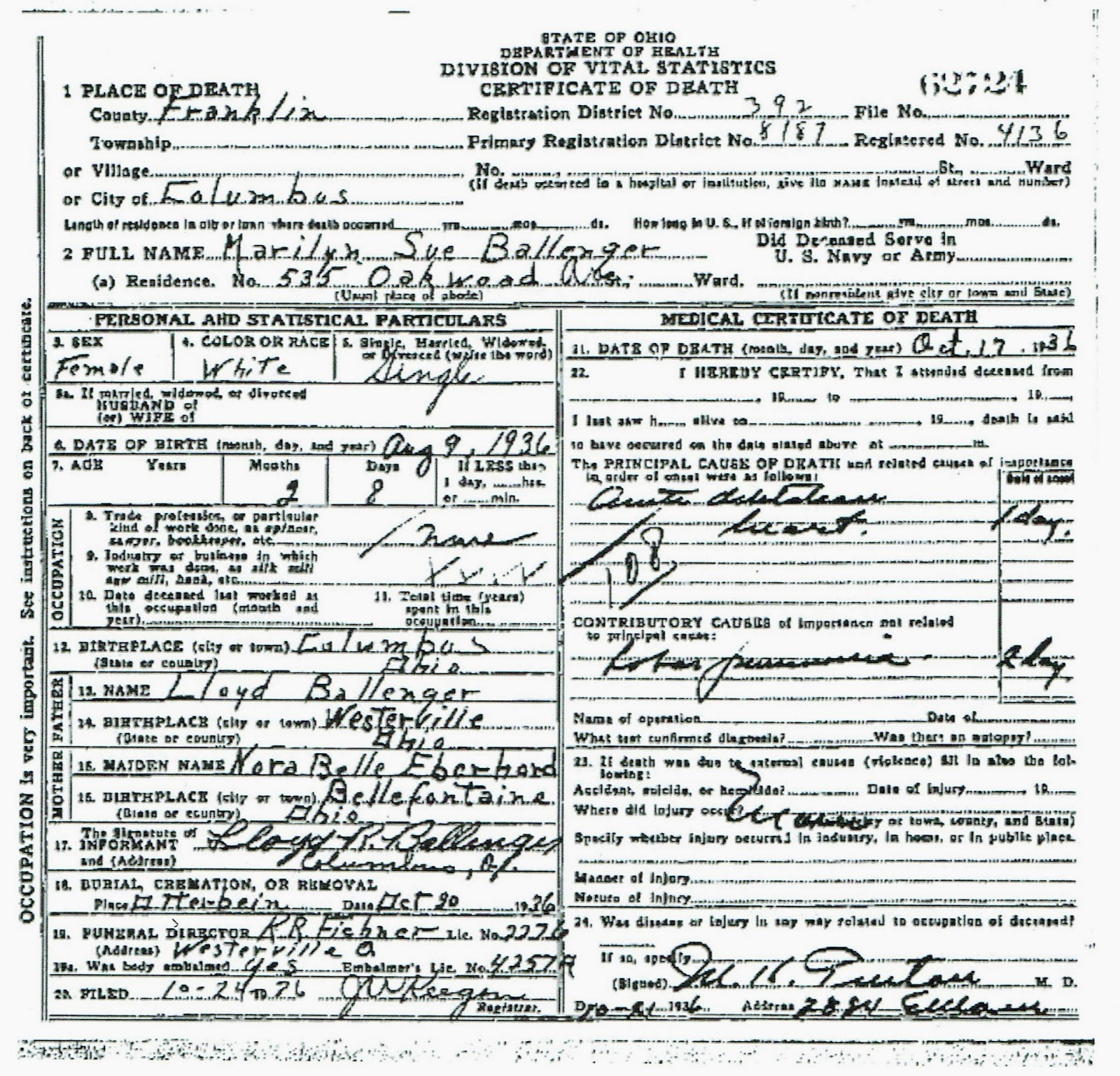
In 1936, the young couple lived in an apartment at 535 Oakwood Ave. on the near east side of Columbus, within easy walking distance of Reeb’s. Nora was thrilled when she found out she was pregnant early in the year. She endured a long, hot summer in the apartment, chatting with her neighbors in the morning and walking down to the restaurant in the afternoon, when the lunchtime rush was over. All of the employees and many regular customers knew she was expecting.

On August 9, 1936, Nora gave birth to a beautiful baby girl. They named her Marilyn Sue Ballenger. Lloyd received hearty congratulations, cigars, and free drinks from his many well-wishers at Reeb’s. Nora delighted in visits from her sisters and friends. Even though it was her first child, Nora had a lot of experience with babies from helping her mother tend her five younger siblings. She knew what to do when Marilyn fussed.

As the humid days of August gave way to blue September skies, Nora started taking Marilyn down to Reeb’s on her afternoon walks, happily pushing the baby carriage in front of her. Her daughter would nap in the carriage while she talked and laughed with the waitresses. It was a golden month.

But in mid-October, something went terribly wrong. Marilyn caught a cold, or so it seemed; she rasped, wheezed, and cried, and nothing Nora did seemed to settle her down. After a long day and night with the inconsolable baby, Nora took her to the doctor. Decades later, she would remember the shock of that Tuesday afternoon as clearly as if it just happened.

The doctor told Nora that he was sorry, but something was wrong with little Marilyn’s heart. He couldn’t do anything for her. There was no medicine, no surgery, nothing that would fix it. She had the pneumonia now, but even if she got over that, it wouldn’t cure what was wrong with her heart. The best thing Nora could do was take her home and love her for the time she had left. He was so sorry.

By Saturday morning, October 17, 1936, Marilyn's struggles were over. She was nine weeks old.


I can’t imagine how incredibly hard those four days must have been for my grandparents. When she told me the story, more than fifty years after it happened, Nora couldn’t hold back the tears. The pain in her own heart was still fresh.

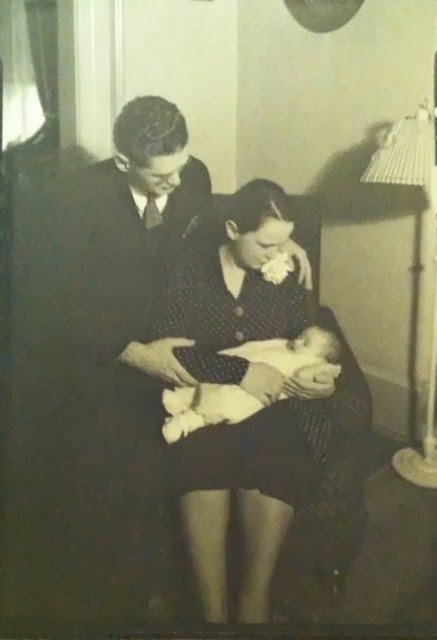
In her grief, Nora realized she had no photograph, nothing to remember Marilyn by. They didn’t own a camera. Lloyd found a neighbor with a camera, and his wife helped Nora dress the baby. The neighbor kindly took a picture of Lloyd and Nora with their first-born daughter, now laying peacefully in Nora’s lap. It was hard to do at the time, but the picture brought Nora some comfort in the years that followed.


Marilyn was buried in Otterbein Cemetery in Westerville, Ohio. She rests today next to Lloyd's brother, Dwight “Smokey” Ballenger, and his wife. Even though her parents are not there, little Marilyn has plenty of family at Otterbein Cemetery. Her paternal grandparents Charles and Irene Ballenger, great-grandparents James and Anna Ballenger, and great-great-grandparents Charles and Rebecca Jane Ballenger are all there. Her maternal grandparents, Llewellyn and Mary Eberhard, are in a different section of the historic cemetery.


In writing this, I hope to preserve Marilyn’s story, and honor my grandparents’ memories. Marilyn’s life was short, but she was never forgotten. Perhaps this will help ensure she never will be.
--Shelley

Certificate citation: “Ohio Deaths, 1908-1953,” digital image, FamilySearch (www.familysearch.org: accessed 5 April 2011), death certificate no. 62724 (1936), Marilyn Sue Ballenger; citing original records, Ohio Department of Health, held at Ohio Historical Society, Columbus.

© Shelley Bishop 2014

This is the third in a series, “52 Ancestors in 52 Weeks,” coordinated by Amy Johnson Crow at No Story Too Small.

You might also enjoy:

January 14, 2014

52 Ancestors #2: Love Wins Out for Nora Eberhard


As one of 18 children born to Llewellyn and Mary (Comfort) Eberhard, Nora Eberhard’s childhood days were filled with household chores, hand-me-down clothes, and long walks to a one-room schoolhouse from the family’s dairy farm. By the time she reached her 20s, the Great Depression had set in. Nora moved to nearby Westerville, Ohio, where she boarded with a local couple while working at the Kilgore Manufacturing Company. Her job was to insert rivets into Kilgore’s toy cap pistols. It gave her great satisfaction to see the finished toy pistols and know she had a part in making them.

Nora also enjoyed getting to know her co-workers. One of the girls on the Kilgore riveting line with her was Florence Ballenger. When Nora needed a new place to stay, Florence invited her to board with her family. Florence’s parents, Charles and Irene Ballenger, agreed to the plan.

Lloyd Ballenger, Florence’s brother, quickly took notice of his sister’s friend. Lloyd was working at a diner in downtown Westerville when they met, but started a new job at Reeb’s Restaurant on the east side of Columbus in 1933. His long hours at the restaurant left little time for meeting girls. He began courting Nora, taking her to house parties and going for drives in friends’ cars. Even though Westerville, “The Dry Capital of the World,” was the national headquarters of the Anti-Saloon League, the young couple still found ways to have fun.1

By early 1935, Nora and Lloyd decided to get married. There was only one problem. Nora’s mother, Mary, had gotten very upset by events at the wedding of one of her other daughters, swearing she never wanted to attend another wedding. There wasn’t enough money for a wedding, anyway. They quietly hatched a plan, telling only Florence and her boyfriend, Gordon Meeks.

Two weeks after her 25th birthday, on March 30, 1935, Nora did her dark hair up in tight curls and put on a new white dress. Lloyd donned his best suit and shiny black shoes. In the early morning hours, Gordon drove the foursome down the 3-C Highway in his Model A Ford to the state border at Cincinnati. They crossed over the Ohio River and into Boone County, Kentucky. At the parsonage of a Baptist church in Walton, Nora and Lloyd found a minister willing to marry them. With Florence and Gordon standing by, they said their vows. All their hard work melted away as they stood on the steps of the parsonage, beaming, for their first picture as husband and wife.

 
They registered their marriage at the courthouse later the same day:2

When they returned home, the newlyweds announced their marriage to their families and settled into an apartment that Lloyd had moved into earlier. A short notice appeared in the Westerville Public Opinion:

          LLOYD R. BALLENGER AND
            MISS EBERHARD MARRY
Mr. and Mrs. Charles Ballenger of Westerville announce the marriage of their son, Lloyd, to Miss Nora Eberhard, daughter of Mr. and Mrs. L. J. Eberhard of Center Village. The marriage took place Saturday, March 30, at Walton, Ky. Miss Florence Ballenger, sister of the groom, and Mr. Gordon Meeks of Columbus were the attendants. The couple are residing at 1186 E. Main St., Columbus.3

Fifty years later, in March 1985, Nora and Lloyd celebrated their golden anniversary surrounded by friends and family. In a way, it was the wedding they never had.


--Shelley

1. “Westerville, Ohio,” Wikipedia (http://en.wikipedia.org/wiki/Westerville,_Ohio: accessed 13 January 2014).
2. Boone County, Kentucky, marriage certificate no. 218 (1935), Lloyd R. Ballenger and Nora Belle Eberhard; Kenton County Clerk’s Office, Covington, Kentucky.
3. “Lloyd R. Ballenger and Miss Eberhard Marry,” Public Opinion (Westerville, Ohio), 4 April 1935, p. 2, col. 4.

 © Copyright 2014 Shelley Bishop
This is the second in a new series, "52 Ancestors in 52 Weeks," coordinated by Amy Johnson Crow of No Story Too Small.

You might also like:

January 7, 2014

52 Ancestors #1: Lloyd Ballenger and Reeb's Restaurant


Lloyd Ballenger Reeb's Restaurant Columbus Ohio
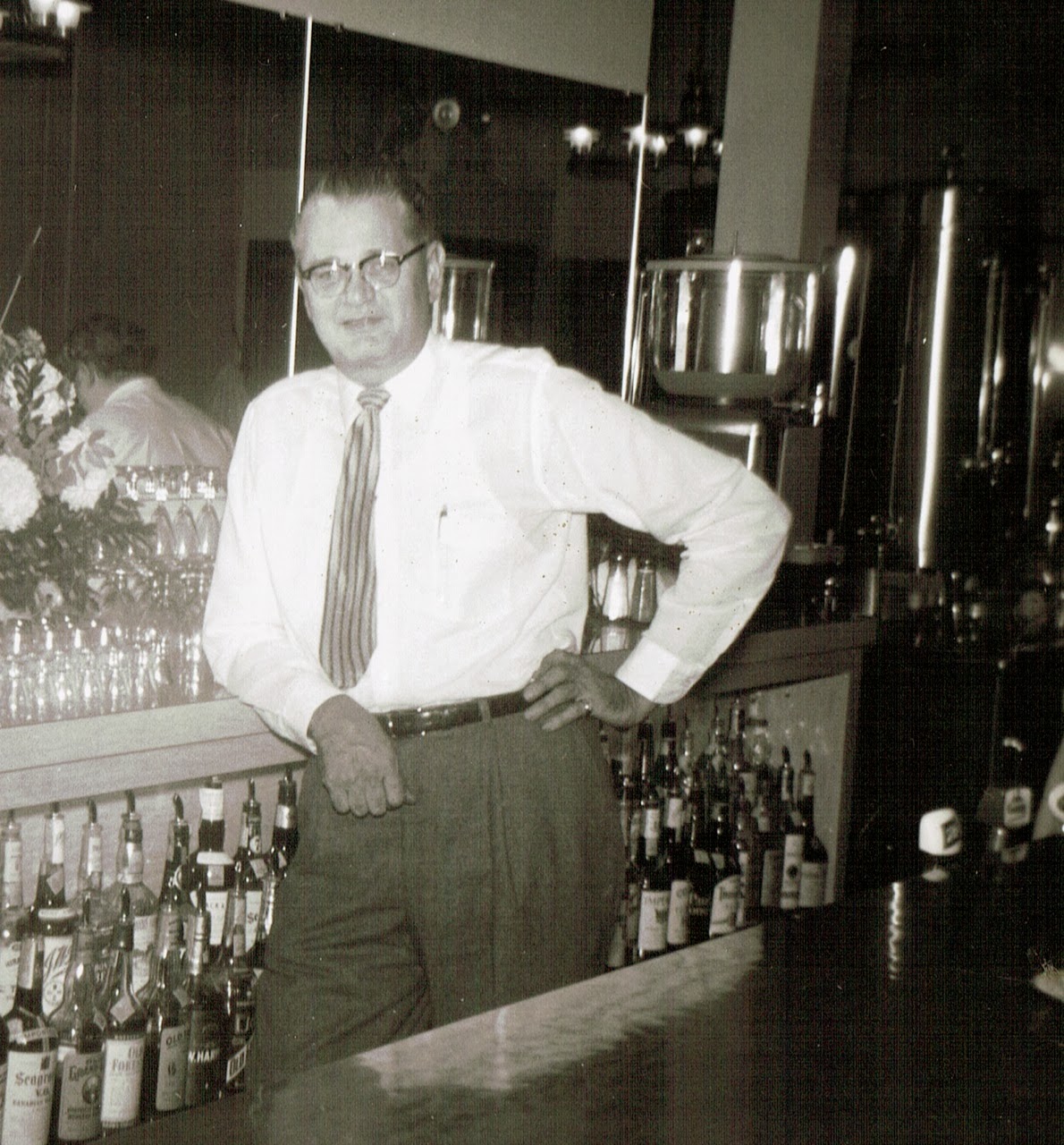
Lloyd Ballenger behind the counter at Reeb's Restaurant, May 1955

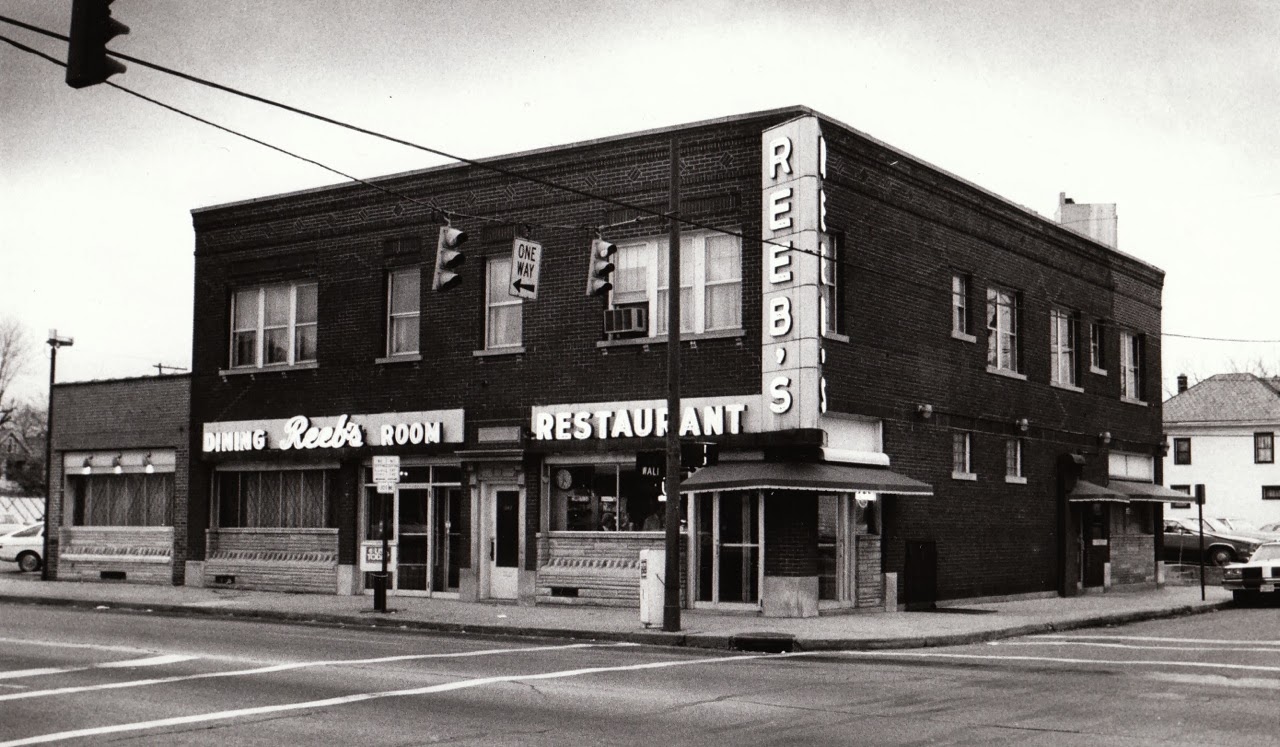
When 17-year-old Lloyd Ballenger took a job at a diner in Westerville, Ohio, at the beginning of the Depression, he was just helping his family make ends meet. By the time he left for bigger and better things a few years later, he knew he had found his life’s calling. For fifty years, Lloyd was an employee, manager, co-proprietor, and owner of Reeb’s Restaurant, located at 1041 E. Livingston Ave. east of downtown Columbus.

Reeb’s was founded as a bar and lunch counter by Ed Reeb in 1911. My grandfather, Lloyd, came on board in 1933, and in 1939 Reeb named him manager. Reeb and his wife didn’t have any children, so when he passed away, he left shares of the restaurant to four trusted employees. Lloyd Ballenger and one of the others, Fred West, operated and expanded Reeb’s in the 1940s and ‘50s.

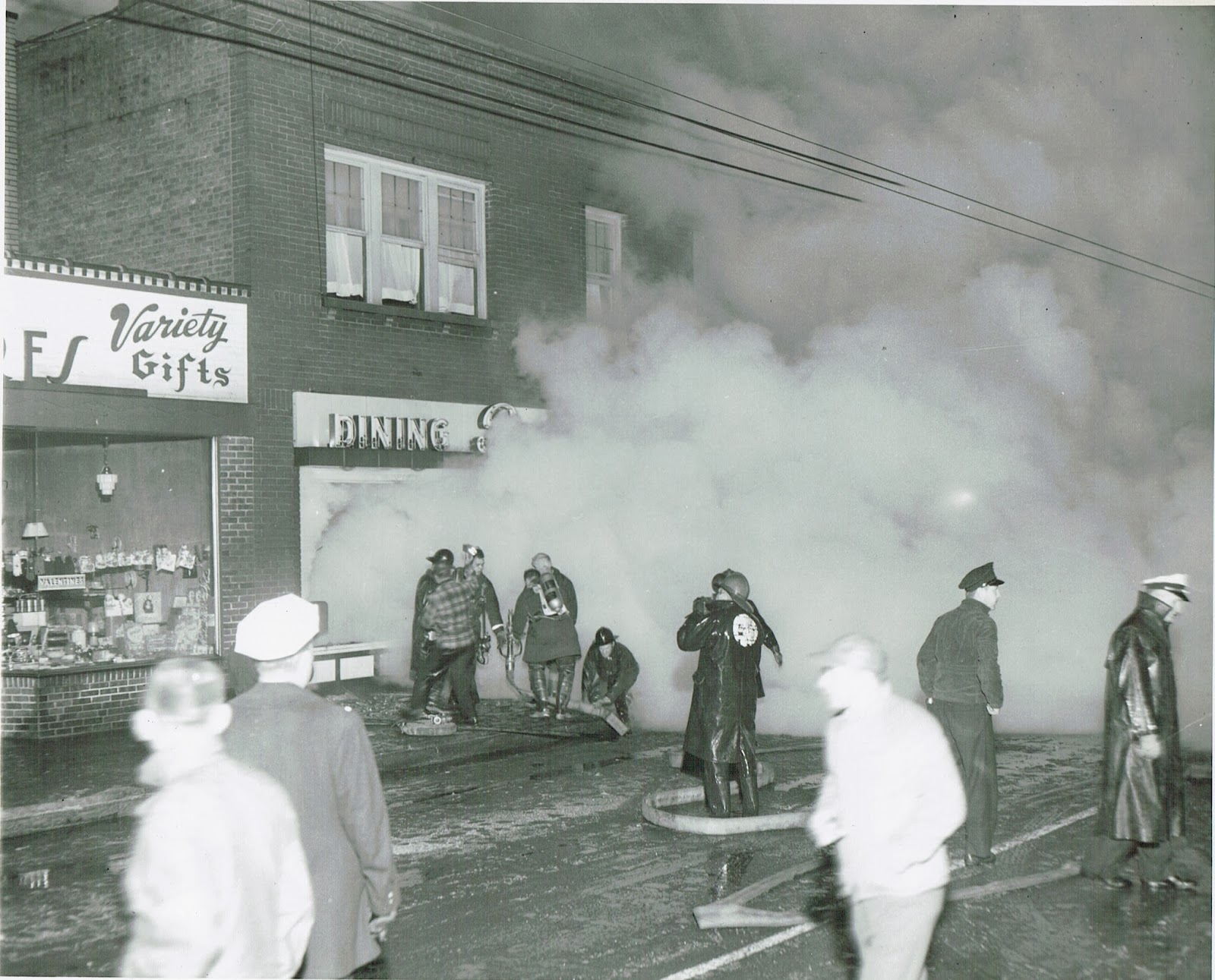
The night of February 1, 1955, Reeb’s suffered a devastating fire that gutted the inside of the building. Columbus firefighters responded admirably, but only the red brick exterior survived. Thanks to a good insurance policy, Reeb’s employees continued to draw full pay during the four-month remodeling process.

Reeb's Restaurant fire Columbus Ohio
Fire at Reeb's Restaurant, Columbus, February 1, 1955

On reopening day—May 23, 1955—Lloyd was photographed in his usual place behind the counter, where he could greet returning customers coming in the door. Columbus Citizen columnist Ben Hayes noted, “What a busy corner! They stood in line for lunch (the line extending into the street) and the same thing happened in the evening. The bright newness was fine, sure—but they reached avidly for the menu. The turtle soup, the onion soup, the bean soup—yes, it was all there. And the roast beef and the steaks and the chops. And the strawberry shortcake: That is the flavor of Reeb’s cuisine.”1

Reeb's Restaurant Columbus Ohio
Reeb's Restaurant, 1041 E. Livingston at Champion Ave., Columbus, Ohio

My father, Ed Ballenger, joined his father in the business in 1959. Lloyd and Ed ran Reeb’s together throughout the 1960s, ‘70s, and into the ‘80s. We had a big celebration when Lloyd reached the fifty-year mark with Reeb’s in 1983. But by then, the inner city neighborhood around the restaurant had fallen into serious decay. I know closing the door on Reeb’s was one of the most difficult things my father and grandfather ever had to do. The building was demolished in 2010.

In my mind’s eye, I can still picture Lloyd standing in his customary spot behind the bar, presiding over the corner of Livingston and Champion avenues. Oh, what I would give to sit at that counter again.

--Shelley

1. Ben Hayes, “Around Columbus,” Columbus Citizen (Columbus, Ohio), 25 May 1955. Loose clipping in author’s collection.

 © Copyright 2014 Shelley Bishop

This is the first in a new series, 52 Ancestors in 52 Weeks, coordinated by Amy Johnson Crow of No Story Too Small.

You might also enjoy:


November 28, 2013

Grandma's Sugar Cream Pie: A Thanksgiving Tradition


Every family has its own Thanksgiving traditions, stories, and favorite dishes. It’s a rare Thanksgiving table, though, that doesn’t include some sort of pie. Thanksgiving and pie go together like, well, turkey and gravy. I always make pumpkin pie, spiced up with extra cinnamon, ginger, and cloves. Other families roll out the apple, cherry, pecan, sweet potato, or lemon meringue pies. But my childhood Thanksgivings always featured my Grandma Ballenger’s specialty: sugar cream pie.

sugar cream pie Thanksgiving Pennsylvania Dutch

Nora (Eberhard) Ballenger’s parents came from Lehigh County, Pennsylvania, and when asked about her ancestry, all she could tell me was that her family was Pennsylvania Dutch. Sugar cream pie was one of her Thanksgiving staples, so naturally it became one of my favorites, too. She told me her mother, Mary (Comfort) Eberhard, used to make it when her jars of home-canned apples and other fruit ran out in the winter.

Grandma didn’t use a recipe when she cooked, and was at a bit of a loss when, as a young bride, I asked her to write it down for me. She said you just take a little flour, some sugar, and some milk and mix them together. Well, let’s just say my first efforts proved it’s not quite that simple. Over the years I’ve tweaked the recipe to get it just the way I like it, creamy on the bottom with a milky layer on top and lots of nutmeg. It usually sets up just fine, but I still cross my fingers when I take it out of the oven.

Here, then, is the recipe I use for Grandma’s 
“Pennsylvania Dutch” Sugar Cream Pie:

Place a refrigerated pie crust in a deep dish glass pie plate and crimp edges (I use Pillsbury’s Pie Crusts). Preheat oven to 400 degrees.

In a small bowl, mix together:  ½ cup flour
                                             1 cup sugar
Stir in until smooth:                1 cup whole or 2% milk
Pour mixture into unbaked pie crust. Gradually pour in another ½ cup or so of milk to fill and pull a fork through to gently mix (don’t stir with a spoon).
Cut into thin slivers:                ½-1 Tbsp. butter
Drop the slivers of butter onto the pie.
Sprinkle with:                          dashes of ground nutmeg

Bake at 400 degrees for 10 minutes. Lower temperature to 325 degrees, and bake another 40 minutes. Transfer carefully from oven. Pie may seem a little runny but will firm up as it cools. Refrigerate after cooling.


What pies are part of your Thanksgiving tradition? Whatever they are, I wish you a relaxing and enjoyable holiday, and hope you, like me, have much to be thankful for this year. Happy Thanksgiving!
--Shelley

You might also like:

November 10, 2013

Veterans in My Family Tree


Civil War flag Ohio Historical Society collection

For this Veteran’s Day, I’ve challenged myself to compile a master list of my ancestors who served in the military. I want to pull this information together both as a tribute and as a reference to the veterans I’m researching, organized by the war they fought in. When I read about a new military records database that’s just become available online, or discover a resource for researching a particular war, I’ll have a ready reminder of the names I want to search for. A side benefit is that compiling any list of this sort tends to expose gaps in my research, and reminds me of things I want to check into.

The veterans I’m researching in my family tree are:

Revolutionary War

Philip Roush (6th great-grandfather)
Born: 18 March 1841 in either Pennsylvania or Virginia
Died: 1 March 1820 in Cheshire, Gallia County, Ohio
Served in: Dunmore County (Virginia) Militia under Capt. Jacob Holeman
Enlisted: 29 May 1775
Rank: Private
Spouse: Catharine Kelchner
DAR Ancestor Number: A098986
Pension Record: none known
Buried: Roush Cemetery, Cheshire, Ohio
Notes: Dunmore County is now Shenandoah County.

Jacob Roush (6th great-grandfather)
Born: 1746 in either Pennsylvania or Virginia
Died: March 1830 in Cheshire, Gallia County, Ohio
Served in: Dunmore County (Virginia) Militia under Capt. Jacob Holeman
Enlisted: 29 May 1775
Rank: Private
Spouse: Catharine Fox or Fuchs
DAR Ancestor Number: A098978
Pension Record: none known
Buried: Roush Cemetery, Cheshire, Ohio
Notes: Jacob also fought in the Battle of Point Pleasant in Lord Dunmore’s War, before the outbreak of the Revolutionary War, under Capt. John Tipton.

War of 1812
No ancestor currently known

Civil War

Newel King (3rd great-grandfather)
Born: 17 January 1838 in Cheshire, Gallia County, Ohio
Died: 17 September 1896 in Cheshire, Gallia County, Ohio
Served in: Company B, 91st Ohio Volunteer Infantry
Enlisted: 6 August 1862
Rank: Private
Spouse: Electa Roush
Pension Record: Invalid certificate #186,803; Widow’s certificate #436,094
Buried: Gravel Hill Cemetery, Cheshire, Ohio
Notes: Newel contracted measles during the war, resulting in hospitalization in the U.S. General Hospital in Gallipolis and a lifelong struggle with epilepsy.

John Steele (3rd great-grandfather)
Born: June 1826 in Wythe County, Virginia
Died: 28 April 1873 in West Columbia, Mason County, West Virginia
Served in: Company K, 18th Ohio Volunteer Infantry
Enlisted: 16 October 1861
Rank: Private
Spouse: Mary Russell
Pension Record: Widow’s certificate #373,222
Buried: unknown
Notes: John was hospitalized due to illness in Huntsville, Alabama, and for the last year of his enlistment served as company cook. He suffered from weakness and disabilities after the war.

Ludwig Scheibel (2nd great-grandfather)
Born: 29 September 1839 in Germany
Died: 25 December 1910 in Columbus, Franklin County, Ohio
Served in: Company G, 6th Missouri Volunteer Infantry
Enlisted: 23 May 1861
Rank: Private
Spouse: Paulina Trebtan or Treptau
Pension Record: Invalid certificate #27,522
Buried: Green Lawn Cemetery, Columbus, Ohio
Notes: Ludwig also went by the American name “Louis.” He received a gunshot wound in battle at Chickasaw Bayou in late December 1862, and was given a disability discharge in April 1863.

World War I

Roy David Eberhard (great-uncle)
Born: 9 March 1894 in Allentown, Pennsylvania
Died: 6 September 1977 in Westerville, Ohio
Served in: 324th Field Artillery, U.S. Army
Enlisted: 5 October 1917
Rank: Private First Class
Spouse: Ethel Jewett
Pension Record: unknown
Buried: Union Cemetery, Columbus, Ohio
Notes: Roy served in the Meuse-Argonne Offensive (Battle of Argonne Forest) on the Western front.

World War II

Dwight Charles Ballenger (great-uncle)
Born: 27 April 1916 in Westerville, Ohio
Died: 20 January 1990 in Westerville, Ohio
Enlisted: 22 December 1942
Rank: Staff Sergeant
Spouse: Betty Rosensteele
Pension Record: unknown
Buried: Otterbein Cemetery, Westerville, Ohio

Have you found a good way to keep track of the veterans in your family tree? If so, I’d like to hear how you do it. And if not, why not make a list like this for yourself? If you post it online, feel free to share a link in the comments section below.

Wishing every veteran a good Veteran’s Day, with heartfelt thanks—
Shelley

Related Posts:

LinkWithin

Related Posts Plugin for WordPress, Blogger...